
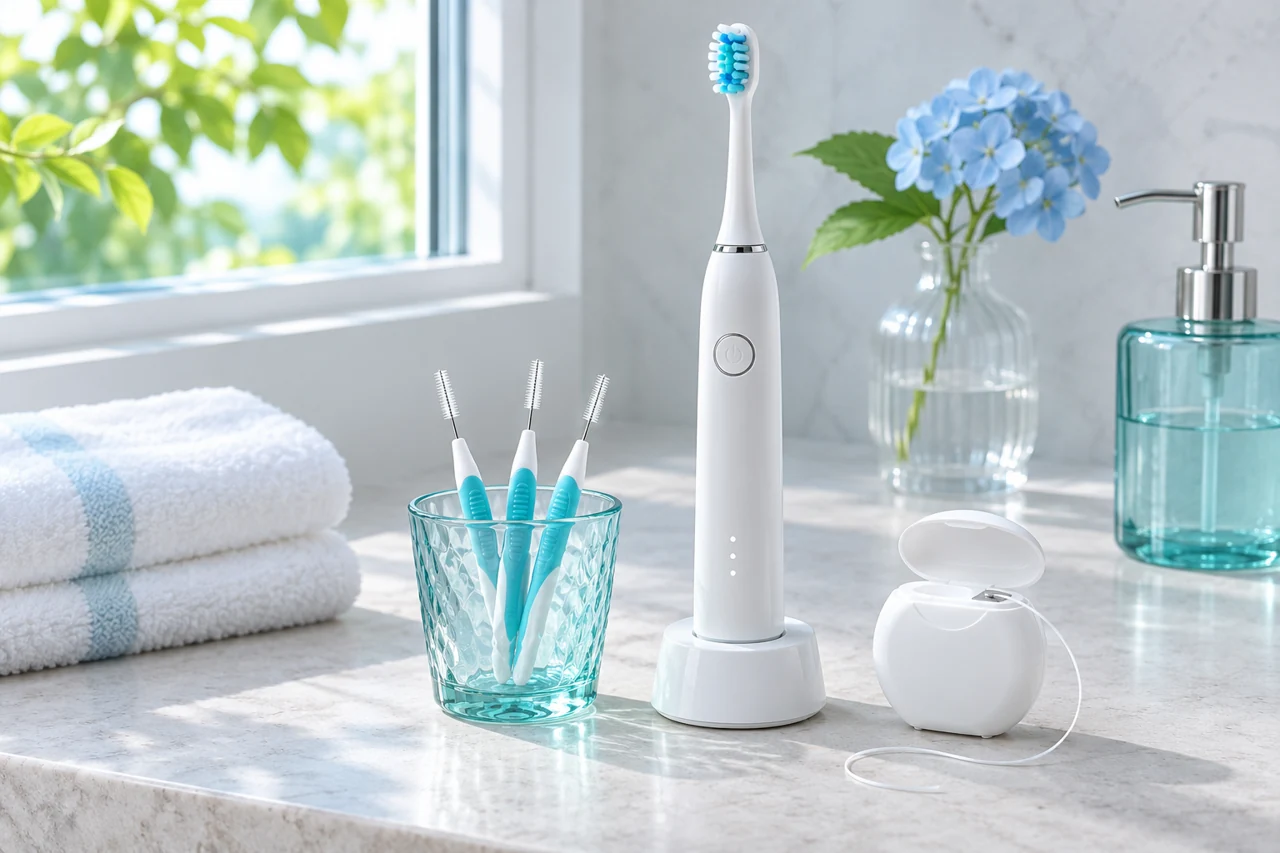
Making oral care a natural part of daily life starts with small, consistent steps. From the time you spend brushing to cleaning between your teeth, let us explore a care routine that works for you.
Why is daily care a matter of habit?
Stepping up care only just before a check-up is not enough for a healthy mouth. It is more meaningful to establish a practical routine that fits into daily life. Many people brush briefly in the morning rush or skip evening care because they are tired. Start by recognising where you struggle and shaping your routine accordingly, rather than blaming yourself.
When reviewing your care, do not focus solely on which toothpaste you buy. The time you spend brushing, areas you cannot reach and cleaning between your teeth matter too. Ask for personal advice if you have existing crowns, implant-supported prostheses or crowded teeth. Not everyone needs to use the same tool in the same way; what matters is learning a method you can maintain and use correctly.
Reaching every surface matters as much as brushing time
The general care recommendation is to brush twice a day for about two minutes with fluoride toothpaste. Remember the outer, inner and chewing surfaces of your teeth. You can use a manual or electric toothbrush; correct use matters as much as your choice. Spitting out excess toothpaste without immediately rinsing with water helps preserve the effect of the remaining fluoride. If you have been given different personal advice, follow your dentist's instructions.
To review your own routine, pay attention to the order in which you brush. You may miss the same area every day or have trouble reaching your back teeth. At your next check-up, describe the brush and method you use. A small adjustment in technique can provide a clearer and more sustainable starting point than constantly trying new products.
Which tool suits you for cleaning between your teeth?
A toothbrush may not reach every space between the teeth. Tools such as dental floss or an appropriately sized interdental brush are considered according to individual needs. The aim is not only to remove food debris; plaque control matters too. Ask your dentist which tool to use where and how to move it. Do not try to clean by forcing the gums or using random hard objects.
Having trouble holding floss or choosing an interdental brush size at first does not mean you should stop cleaning these areas altogether. Describe the difficulty specifically. Learning how to use a suitable tool is more helpful than buying several different products. If something catches, you feel a sharp edge or a problem persists in a particular area, mention it separately at your examination.
Professional cleaning does not replace daily care
Hardened tartar cannot be removed by brushing at home; it requires professional assessment and cleaning. However, having your teeth cleaned does not mean you can take a break from home care. At check-ups, you can find out where deposits are occurring. This helps you understand which areas to focus on in your own routine, beyond a general recommendation to ‘brush better’.
Check-up intervals do not have to be the same for everyone. Your dentist assesses your oral health, previous treatments and needs. When visiting AltanDent in Sarıyer Reşitpaşa, you can share which aspects of care you struggle with, the products you use and any bleeding or sensitivity. Finding out at the end of the visit how often to follow each recommendation and when you will be reassessed helps you maintain daily care more consistently.
Prepare for your next check-up with a few notes
You can make a brief note of when daily care tends to slip, which spaces between your teeth are difficult to clean and the name of the tool you use. These notes help you describe your own experience at the appointment instead of speaking in general terms. After trying the recommended method, also share what has become easier or remains difficult. When your care plan is clear, it may be easier to fit new habits into daily life and remember your questions at the next assessment.