
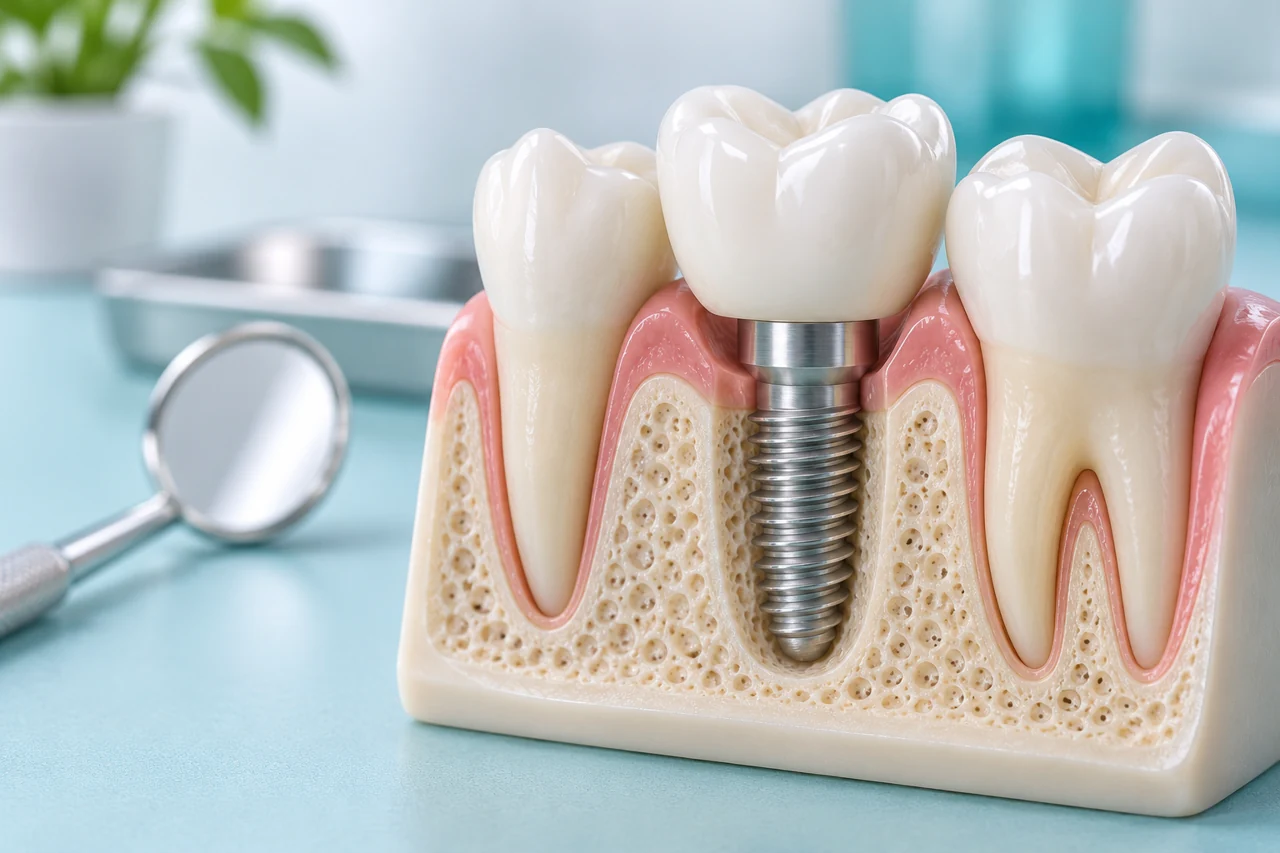
When considering how to replace a missing tooth, it is easy to focus only on its appearance. Implant planning, however, starts with a consultation that considers your medical history, bone structure and expectations in daily life together.
The implant decision is not based solely on the number of missing teeth
Many people start researching implants to find out how many days treatment takes or what it costs. These questions matter, but before an examination there is no single answer that applies to everyone. The site of the missing tooth, the other teeth in your mouth and expectations for the prosthesis are assessed together. The first consultation aims to provide a framework in which you can understand the reasons for the proposed treatment and its stages.
The implant itself is the supporting structure placed in the jawbone; the tooth or prosthesis fitted on it is a separate component. Understanding this distinction makes it easier to understand the treatment schedule and the scope of the proposed plan. A restoration for a single tooth may differ in design from a prosthesis considered for several missing teeth. Comparing your own situation with a single online example may be misleading.
Share your medical history and the medicines you take
At your examination, mention your current conditions, medicines and previous procedures. You can bring previous dental X-rays and treatment records if available. General health and factors related to healing are taken into account in planning. In particular, do not decide yourself whether a medicine should be stopped before surgery; the relevant doctors will consult when necessary.
It is also helpful to describe difficulties you experienced in previous dental treatments. Your experience with anaesthesia, anxiety about appointments or difficulties with removable dentures help clarify expectations. Alongside your health information, share what you would like to change in daily life. Chewing more comfortably, changing the appearance of a particular gap or considering denture use can be different priorities.
Why are the bone and surrounding tissues examined?
Your dentist assesses the examination together with any imaging considered necessary. The characteristics of the planned implant site and the condition of supporting tissues matter. This assessment informs discussion of whether additional procedures are needed, how the prosthesis will be designed and the schedule. The type and necessity of imaging should be determined by individual findings; assuming the same examination package for every patient is inappropriate.
When listening to the plan, you can ask how many implants are proposed in each area and how that number relates to the prosthesis. If there is another treatment option, learn its scope too. If additional bone or soft tissue procedures are being considered, clarify why they are thought necessary and how they might affect the schedule. Asking again about unfamiliar terms is a natural part of deciding on treatment.
Understand what same-day teeth and immediate loading mean
Placing an implant on the same day as extraction is not the same as attaching a prosthesis to it soon afterwards. Faster approaches may be considered in appropriately selected cases; conditions such as primary stability and the prosthetic plan matter. Fitting a temporary restoration does not mean the permanent prosthesis or healing process is complete. Always ask which stage the phrase ‘in one day’ refers to in your plan.
During an implant assessment at AltanDent in Sarıyer Reşitpaşa, you can discuss the overall process, check-up schedule and distinction between temporary and permanent prostheses. Do not arrange travel or work solely around the first appointment. Learn how to care for the restoration and when to contact the clinic. Understanding options, limitations and subsequent responsibilities before deciding on treatment provides a stronger foundation than deciding solely on speed or a treatment name.
Clarify the plan at the end of the consultation
Before leaving the appointment, make sure you know the next step. You can note the investigations to be carried out, the purpose of the next appointment and any preparations requested of you. It is natural to take time to decide or ask for another option to be explained again. Having all questions about your own situation answered is more useful than trying to understand the treatment schedule from a headline or sample photograph alone.